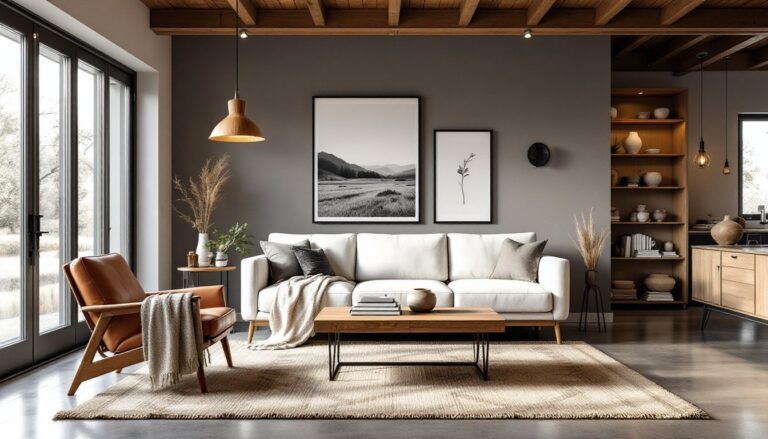

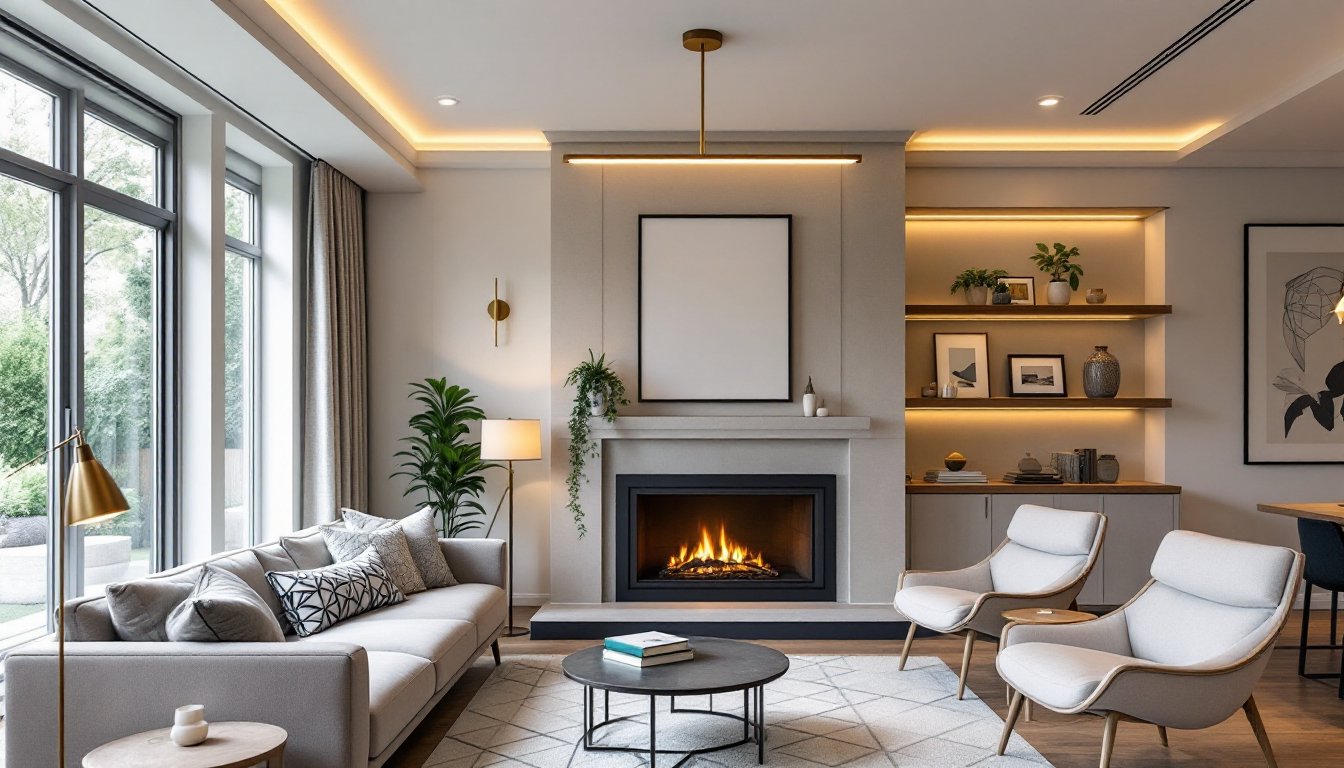
Good lighting can make or break a living room. It’s the difference between a space that feels welcoming and one that feels harsh, cramped, or cold. Modern living room lights go far beyond the standard ceiling fixture, today’s options blend function, style, and smart technology to create layered, flexible illumination that adapts to how you actually live. Whether you’re rewiring an older home, refreshing a dated setup, or building from scratch, understanding the types of fixtures available, how they work together, and what technology makes sense for your lifestyle will help you nail the job.
Table of Contents
ToggleKey Takeaways
- Modern living room lights should use a layered approach combining ambient, task, and accent lighting to create flexibility and control rather than relying on a single overhead fixture.
- LED bulbs are now standard for modern living room lights, delivering the same brightness as incandescent bulbs while using 8–10 watts instead of 60 watts and lasting 25,000–50,000 hours.
- Warmer color temperatures at 2700K create a cozy atmosphere ideal for living areas, while cooler whites above 5000K are not recommended for evening use as they can interfere with sleep.
- Pendant lights, recessed lighting with dimmers, and wall sconces are contemporary fixtures that add both visual interest and practical illumination without cluttering the room.
- Smart bulbs and dimmer switches offer app control and automation capabilities, allowing you to adjust brightness, set schedules, and create lighting scenes without rewiring your entire living room.
- Proper pendant positioning depends on ceiling height (12 inches below 8-foot ceilings, 15 inches below 9-foot, and 18 inches below 10-foot) to maintain visual balance and prevent obstruction.
Understanding Modern Lighting Styles and Trends
Modern lighting aesthetics have shifted away from the “one big chandelier” formula. Today’s approach prioritizes clean lines, minimalist hardware, and fixtures that either disappear into architecture or become intentional design focal points. You’ll see a lot of industrial-inspired brass pendants, sleek track lighting systems, and flush-mount fixtures with geometric shapes.
Linear pendant lights have become a staple in contemporary living rooms because they work well over a sofa or behind a seating area without taking up much visual space. Recessed lighting remains popular for general illumination, especially when dimmers are installed, because it keeps the ceiling uncluttered. Wall sconces are making a comeback too: paired on either side of a fireplace or artwork, they add warmth and reduce reliance on overhead lights.
The shift is also practical. Modern fixtures often accommodate LED bulbs as standard, making energy efficiency the baseline, not an afterthought. Most homeowners now expect their lights to be dimmable, to support smart home integration, and to be easy to install or modify without rewiring the entire room.
Essential Types of Living Room Lighting Fixtures
A well-designed living room uses layered lighting, multiple types of fixtures working together to create flexibility. You’re not relying on a single overhead light to do all the work.
Ambient and Task Lighting Options
Ambient lighting provides overall illumination and sets the mood. Recessed ceiling lights spaced 16 to 24 inches from the wall (and 2 to 3 feet apart in rows) create even wash without harsh shadows. Flush-mount or semi-flush fixtures work well in rooms with standard 8-foot ceilings, while pendant lights hung at 30 to 36 inches above a coffee table add visual interest while still flooding the room with light.
Task lighting directs light where you actually need it, reading a book, working at a desk, or playing games. Table lamps beside a sofa or armchair are the classic choice, but wall sconces flanking a fireplace or artwork accomplish the same goal without floor clutter. A reading lamp should deliver 50 to 75 foot-candles of light directly on your work surface. Position it slightly behind or to the side of your seating to avoid glare in your eyes.
Accent Lighting for Visual Interest
Accent lighting highlights architectural features or artwork and adds dimension to the room. Picture lights mounted above artwork, uplighting behind floating shelves, or cove lighting hidden in a soffit all serve this purpose. Accent lights typically use about one-third the wattage of ambient lights and create focal points that draw the eye.
LED strip lighting has made accent lighting more accessible, and safer, than older halogen options. These flexible strips hide easily in coves, behind bookcases, or along baseboards and are dimmable on most modern systems. They run cool enough to install against wood trim without fire hazard concerns.
Energy-Efficient and Sustainable Lighting Choices
LED bulbs are no longer optional: they’re standard practice. A typical incandescent bulb uses 60 watts and lasts 1,000 hours. An equivalent LED delivers the same light using 8 to 10 watts and lasts 25,000 to 50,000 hours. The math is simple: LEDs save money over time and mean fewer trips to replace burnt-out bulbs.
When shopping for LEDs, pay attention to color temperature measured in Kelvin (K). Warmer light at 2700K feels cozy, ideal for living areas where you relax. Neutral white at 4000K is good for task areas. Cool white above 5000K can feel clinical in a living room and isn’t recommended for evening use, as it can interfere with sleep.
Look for bulbs labeled “dimmable” if you plan to use dimmer switches. Not all LEDs work with all dimmers: incompatibility can cause flickering or buzzing. Phillips Hue, LIFX, and similar smart bulbs are dimmable by nature and compatible with most popular dimmer brands, but they come at a premium price.
Halogen and incandescent fixtures still exist, but they’re becoming harder to justify. If you have an old fixture you love, it’s usually worth rewiring it to accept an LED-compatible socket rather than discarding it. Recycling old fixtures and donating lamps you no longer use keeps waste out of landfills and helps others.
Smart Lighting Technology for Modern Homes
Smart bulbs and controls let you adjust brightness, color temperature, and even color from your phone or voice command. The main platforms are Apple HomeKit, Amazon Alexa, and Google Home. Most bulbs support at least one ecosystem, so check compatibility before buying.
Smart dimmer switches offer a middle ground: install a standard dimmer that accepts Z-Wave or WiFi modules, and you get app control without replacing every bulb in the room. This approach is often cheaper than buying a full set of smart bulbs and gives you flexibility to add smart features room by room.
Automation is the real appeal. Set your lights to gradually brighten at sunrise, dim automatically at sunset, or activate a “movie mode” that instantly adjusts your living room to ideal viewing levels. Some people set schedules so lights come on when they arrive home, creating security and convenience without manual switching.
For installation, most smart bulbs simply screw into standard fixtures, no wiring required. Smart switches do require a neutral wire at the switch box, which older homes may not have. If your home was built before the 1990s, confirm you have a neutral before upgrading to smart switches. Otherwise, smart bulbs alone will serve you well. Recent home automation reviews showcase the latest platforms and compatibility details if you want deeper technical guidance.
Design Tips for Selecting and Positioning Living Room Lights
Start with a room survey. Identify your traffic patterns, seating areas, and any artwork or focal points. Measure the ceiling height and room dimensions, these dictate fixture scale and spacing.
For ceiling height, use this rule of thumb: pendant lights should hang 12 inches below an 8-foot ceiling, 15 inches below 9-foot, and 18 inches below 10-foot. If you go higher, you lose the visual anchor they provide: too low, and they obstruct sightlines. Flush-mount fixtures belong close to the ceiling in rooms under 9 feet, while semi-flush designs bridge the gap for 9- to 10-foot ceilings.
Layering is essential. Install a dimmer on your main ambient circuit, whether that’s recessed lights, a central fixture, or both. Add at least one task light per major seating area. Then layer in accent lights to highlight your best architectural or design features. This three-tier approach gives you control: full brightness for cleaning, medium for everyday, low for evening relaxation.
Consider scale. A small fixture looks lost in a large room, and an oversized pendant overwhelms a cozy nook. As a rough guide, a pendant light diameter should be about one-quarter the width of the furniture below it. Multiple smaller pendants often work better than one large one, especially in long rooms.
Finally, mix finishes thoughtfully. Matte brass, matte black, and brushed nickel are contemporary and forgiving: they pair well with most decor. Shiny chrome dates quickly and shows fingerprints. If you’re unsure, check recent design inspiration on contemporary spaces to see how professional designers are pairing fixtures with current aesthetics. And don’t underestimate the role of bulb warmth, a beautiful fixture with a cold white bulb can sabotage the whole room’s feel.
<h2 id="” data-id=””>Bringing It All Together
Modern living room lighting isn’t complicated once you understand the basic framework: layer your light sources, prioritize dimmers and LEDs, and choose fixtures that match your aesthetic and scale. The beauty of today’s options is that you can start simple, a few recessed lights and a reading lamp, and expand over time as your budget and vision evolve. Whether you’re hiring an electrician for structural work or installing smart bulbs yourself, the payoff is a room that feels intentional, comfortable, and ready for whatever the day brings.