
Mobile home maintenance isn’t glamorous, but it’s non-negotiable if you want to protect your investment and avoid costly repairs down the road. Unlike traditional site-built homes, mobile homes have unique vulnerabilities, exposed underbellies, lighter construction materials, and systems packed tightly together, that demand a different maintenance approach. The good news: most upkeep tasks are manageable for DIYers willing to roll up their sleeves and stick to a routine. This guide walks you through the essential mobile home maintenance tasks that keep your unit safe, functional, and livable year-round.
Table of Contents
ToggleKey Takeaways
- Mobile home maintenance requires twice-yearly roof inspections and immediate patching of cracks or seams to prevent costly water intrusion damage.
- Freeze protection is critical in cold climates: open sink cabinets, insulate exposed pipes, and drip faucets during freezing nights to prevent plumbing emergencies.
- Change HVAC filters every 30 days and vacuum AC condenser coils annually to improve cooling efficiency by 10–15% and extend system lifespan.
- Seal exterior gaps around windows, doors, and utility penetrations, and upgrade skirting and underpinning to prevent pest entry and reduce heat loss.
- A seasonal maintenance checklist addressing spring storms, summer sun damage, fall leaf buildup, and winter cold prevents expensive repairs and protects your mobile home investment.
- Monitor interior moisture levels and vent bathroom exhaust fans outside to prevent rot, mold, and pest attraction in mobile home construction.
Roof and Exterior Inspections
Your roof is the first line of defense against water intrusion, and mobile home roofs deserve twice-yearly inspections, once in spring and again before winter. Most mobile homes use a rubber or TPO (thermoplastic polyolefin) membrane roof, which is durable but vulnerable to punctures, UV damage, and seam separation.
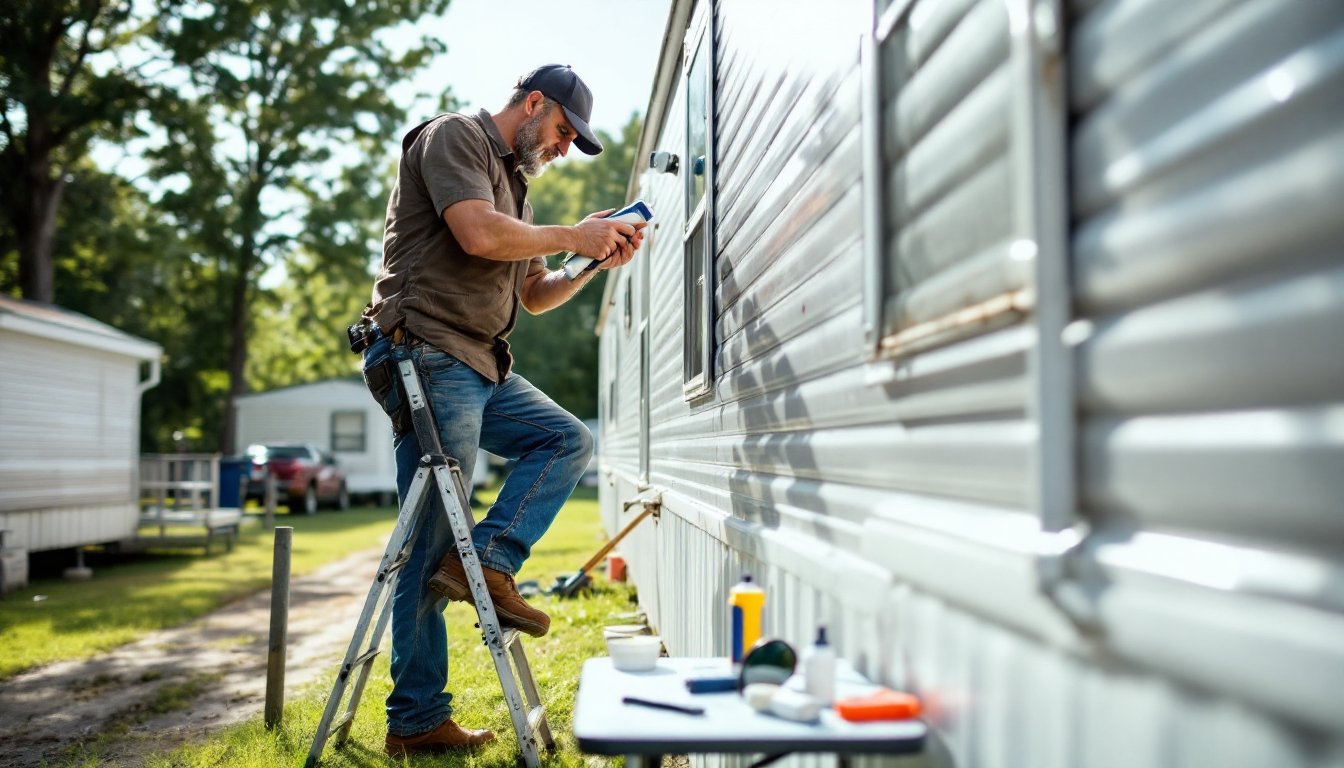
Walk your roof quarterly, checking for pooling water, cracks, blistering, or lifted seams. Bring a caulk gun and exterior-grade roof sealant (not asphalt caulk) to patch small holes immediately. For seams, use TPO-compatible adhesive tape or liquid membrane sealer. If your roof shows significant deterioration or large areas of membrane damage, call a professional, roof replacement on a mobile home is specialized work and mistakes can void warranties.
The exterior walls take a beating too. Inspect siding, trim, and corner boards for rot, gaps, or cracking paint. Vinyl siding can warp if direct sunlight heats aluminum trim excessively: ensure gutters aren’t blocked, which can cause water to cascade down siding seams. Home exterior maintenance efforts also include checking caulk around windows and doors, reseal with silicone caulk if gaps appear. The thin walls of mobile homes transfer temperature swings quickly, so sealing prevents condensation buildup inside.
Plumbing and Water System Care
Mobile home plumbing systems are compact and efficient, but isolation from traditional foundations means pipes are exposed to freezing temperatures and physical stress from settling. Freeze protection is critical in cold climates: open cabinet doors under sinks so warm interior air circulates pipes, insulate exposed lines with foam pipe sleeves, and drip faucets during freezing nights (even a small trickle prevents ice formation).
Water heaters in mobile homes are often smaller (30–40 gallons) and require annual flushing to remove sediment buildup. Turn off the unit, attach a hose to the drain valve, and run water until it runs clear. Check the relief valve annually by lifting the lever briefly: water should flow, then stop when released. Low water pressure, discolored water, or slow drains signal corrosion or mineral deposits inside supply lines, call a plumber if pressure drops more than 10 psi from your normal baseline.
Inspect under the home for dripping connections, soft spots in subfloor near pipes, or visible mold. A home maintenance subscription service can schedule professional inspections, but a quick visual check quarterly catches leaks early. Gray-water holding tanks (if your unit has one) need regular pumping: dumping black-water into an RV tank repeatedly corrodes seals.
HVAC and Ventilation Systems
Mobile home heating and cooling systems run harder than their site-built counterparts because insulation is thinner and air leakage is higher. Change furnace and air-handler filters every 30 days during heating or cooling season, clogged filters force the system to work overtime and shorten lifespan dramatically.
Inspect ductwork for loose connections, crushed sections, or gaps at registers. Mobile home ducts are often flex ducts (flexible aluminum tubes) that can puncture or crimp: tape joints with mastic sealant (not duct tape, which degrades quickly) and wrap insulted sections with vapor barrier tape. If airflow is uneven, one room stays cold while another overheats, balance dampers in the ductwork or have a technician evaluate refrigerant charge and airflow.
Ventilation fans in bathrooms and kitchens must vent outside, not into attic cavities: trapped moisture leads to rot and mold. Ensure bathroom exhaust fans are ducted through the roof or sidewall, not terminating in the crawl space. Air-conditioning condenser coils accumulate dust and debris: vacuum them annually or spray with a commercial coil cleaner. Many mobile home owners skip this, but it improves cooling efficiency by 10–15% and extends compressor life.
Skirting, Foundation, and Underpinning
Skirting, the material that encloses the space under your home, prevents pests, reduces heat loss, and protects plumbing. Metal or vinyl skirting can dent, rust, or crack: patch holes with appropriate sealant and inspect fasteners annually. Loose or missing skirt panels expose pipes and wiring to freezing temperatures and rodent damage.
Underpinning (the structural supports and enclosure system) must remain solid to prevent settling and stress on the home’s frame. Check for cracks in concrete piers or blocks, gaps between the frame and supports, or visible rust on metal support legs. Minor settling is normal, homes shift slightly, but sudden cracks or uneven floors warrant a professional foundation inspection. Standing water under the home indicates poor drainage or grading: ensure the site slopes away from the structure and gutters direct water away from the perimeter.
If your mobile home is older, its underpinning may be minimal. Upgrading to proper concrete piers or adjustable posts ($2,000–$8,000+ depending on home size) significantly improves stability and resale value. This work often requires a permit and professional installation, not a DIY task, but it’s worth budgeting for if your home shows signs of structural stress. Winter home maintenance becomes easier once skirting and underpinning are solid.
Seasonal Maintenance Checklist
Mobile homes face seasonal stressors: spring storms damage roofs, summer sun ages siding, fall leaves clog gutters, and winter cold wreaks havoc on exposed plumbing.
Spring: Inspect roof and siding after winter storms. Check seals around windows and doors. Test HVAC cooling efficiency. Verify skirting is intact and grading drains water away from the home.
Summer: Clean or replace air-handler filters every 30 days. Vacuum AC condenser coils. Check that exterior caulk hasn’t cracked from sun expansion. Inspect gutters and downspouts for corrosion or leaks.
Fall: Clean gutters and downspouts thoroughly before winter. Shut off exterior hose bibs and drain water lines if you live in a climate with freezing temps. Inspect weatherstripping and caulk around windows and exterior doors. Test your furnace and have a professional service it if you haven’t in two years.
Winter: Drip faucets during freezing nights. Inspect pipes for ice formation or signs of freezing. Check that exhaust vents aren’t blocked by snow or ice. Ensure skirting isn’t damaged by snow weight or freeze-thaw cycles. Fall home maintenance planning prevents winter emergencies.
Pest Prevention and Interior Protection
Mobile home construction leaves gaps and cracks that invite rodents, insects, and other unwanted guests. Seal cracks in siding, gaps around utility penetrations, and spaces under doors with caulk or expandable foam. Check screens for tears and seal window frames with weatherstripping.
Inspect inside regularly for signs of pests: droppings, gnawed wires, musty smells, or scurrying sounds in walls. Early detection prevents infestations from spiraling. Baiting stations under sinks and in crawl spaces, combined with regular inspections, are more effective than relying solely on sprays.
Interior moisture control prevents rot, mold, and pest attraction. Vent bathroom exhaust fans and range hoods outside. Use a dehumidifier in damp climates or during humid months: target indoor humidity between 30–50%. Wipe condensation from windows and check wall cavities (especially near exterior walls) for soft spots or discoloration, which signal hidden moisture.
A yearly home maintenance checklist ensures you’re catching pest activity and moisture issues before they escalate. Resources like Family Handyman offer tutorials on caulking, weatherstripping, and pest exclusion techniques. Angi connects you with local inspectors if you want a professional assessment.
Conclusion
Mobile home maintenance is an investment in longevity and safety. Prioritize roof inspections, plumbing freeze protection, HVAC filter changes, and weatherproofing, these four areas prevent the majority of expensive repairs. Create a maintenance schedule, tackle tasks seasonally, and don’t ignore small warning signs. Your home will reward you with years of reliable service and retained value.