
Window treatments are often the last thing homeowners think about, until they realize they’re making or breaking a room’s whole aesthetic. Modern window treatments for living rooms go way beyond the basic roller shade you inherited from the previous owner. Whether you’re chasing minimalist cleanliness, craving smart-home integration, or seeking layered depth that actually controls light and privacy, there’s a solution that fits your style and lifestyle. This guide walks you through seven approaches that work in 2026: practical, stylish, and honest about what each option delivers.
Table of Contents
ToggleKey Takeaways
- Modern window treatments for living rooms range from minimalist roller shades and cellular blinds to motorized shades and smart glass, each offering distinct benefits for light control, energy efficiency, and aesthetics.
- Layered window treatments—combining motorized shades with linen curtains—provide superior thermal performance, flexible light control, and visual depth without sacrificing style or functionality.
- Natural fiber curtains like linen-blend fabrics bring warmth and texture to living spaces while sustainable certifications (OEKO-TEX, GOTS) help environmentally conscious homeowners make responsible choices.
- Motorized shades integrate seamlessly with smart home systems like Google Home and Alexa, allowing voice control and scheduling, though battery-powered options (lasting 2–5 years) balance convenience with affordability versus costly smart glass installations.
- Proper measurement, mounting height (4–6 inches above frame), and fabric fullness (2–2.5x window width) are critical to achieving a designer-quality appearance in any modern window treatment setup.
Minimalist Roller Shades and Cellular Blinds
If you favor clean lines and clutter-free aesthetics, roller shades and cellular blinds are your starting point. Roller shades mount directly to the window frame or wall, creating a flush, streamlined look that doesn’t crowd the space. They come in hundreds of fabrics, blackout materials for media rooms or bedrooms, light-filtering for subtle daylight control, and semi-sheer for privacy without killing natural light.
Cellular blinds (also called honeycomb shades) use their distinctive air-pocket construction to insulate windows better than most alternatives, making them energy-efficient. The double-cell design offers more insulation than single-cell, which matters if your living room gets harsh afternoon sun or cold winter drafts. Both options operate with a simple cord pull or top-down/bottom-up mechanisms.
When selecting roller shade or cellular blind fabric, consider the room’s light-blocking needs. Blackout fabrics typically block 95–99% of light and are measured in single-cell or double-cell depth. For most living rooms, light-filtering cellular blinds at around 2-inch cell depth balance privacy with ambient daylight. Always measure your window’s width and height twice, they’re rarely perfectly square, and add 1 to 2 inches on each side if mounting to the wall for better light control at the edges.
Sleek Motorized Shades for Convenience
Motorized shades transform window operation from a chore into a single tap on your phone or a voice command to your smart home system. Battery-powered motors are the most homeowner-friendly option, no wiring required, and installation stays simple. Plug-in systems work too, though you’ll need an outlet nearby, which isn’t always feasible in older living rooms.
The appeal is genuine: imagine adjusting your living room’s light as the sun moves, all without leaving your seat. Motorized cellular blinds and roller shades integrate with platforms like Google Home or Alexa, opening up scheduling options (raise shades at sunrise, lower them at sunset). The price premium ranges from $100 to $400 per shade above manual versions, depending on the brand and motor type.
Reliability matters here. Battery-powered motors typically last 2–3 years before needing replacement: some premium brands stretch that to 5 years. These modern shades are revolutionizing the market with dual-motor systems and quiet operation that won’t startle anyone in the room. Before committing, test the speed and noise level, some motors whir loudly enough to disrupt conversation or interrupt a show. If you rent or value flexibility, look for battery-powered options that mount removably.
Natural Linen and Sustainable Fabric Curtains
For a softer, warmer aesthetic, natural fiber curtains, especially linen, cotton, or linen-blend fabrics, bring texture and warmth that smooth roller shades can’t match. Linen drapes beautifully, develops character over time, and filters light in a gentle, diffused way. The trade-off: linen wrinkles by nature, it’s not blackout-capable without a separate liner, and it requires occasional shaking or light vacuuming to shed dust.
Sustainable fabric curtains appeal to homeowners prioritizing environmental impact. Look for certifications like OEKO-TEX or GOTS (Global Organic Textile Standard) on cotton, or buy from manufacturers using deadstock and recycled fibers. Brands increasingly offer linen-cotton blends that offer linen’s look with cotton’s durability and easier care.
When hanging linen or natural-fiber curtains, use a sturdy rod and brackets rated for the weight, linen is heavier than polyester, especially in longer drops. Hang them 4–6 inches above the window frame and let them puddle slightly on the floor (1–2 inches of excess fabric) for that designer depth. Interior design tips emphasize that curtain fullness matters: buy fabric at 2x to 2.5x your window’s width so panels hang with graceful folds, not a stretched, thin appearance. This is worth the extra yards of fabric.
Layered Window Treatments for Depth and Control
Layering isn’t trendy, it’s practical. A roller shade under linen curtains gives you blackout control when you need it while keeping the aesthetic soft and textured. This approach also solves a common problem: how to get serious light control and thermal benefits without sacrificing the visual warmth of fabric curtains.
Combining Shades with Curtains
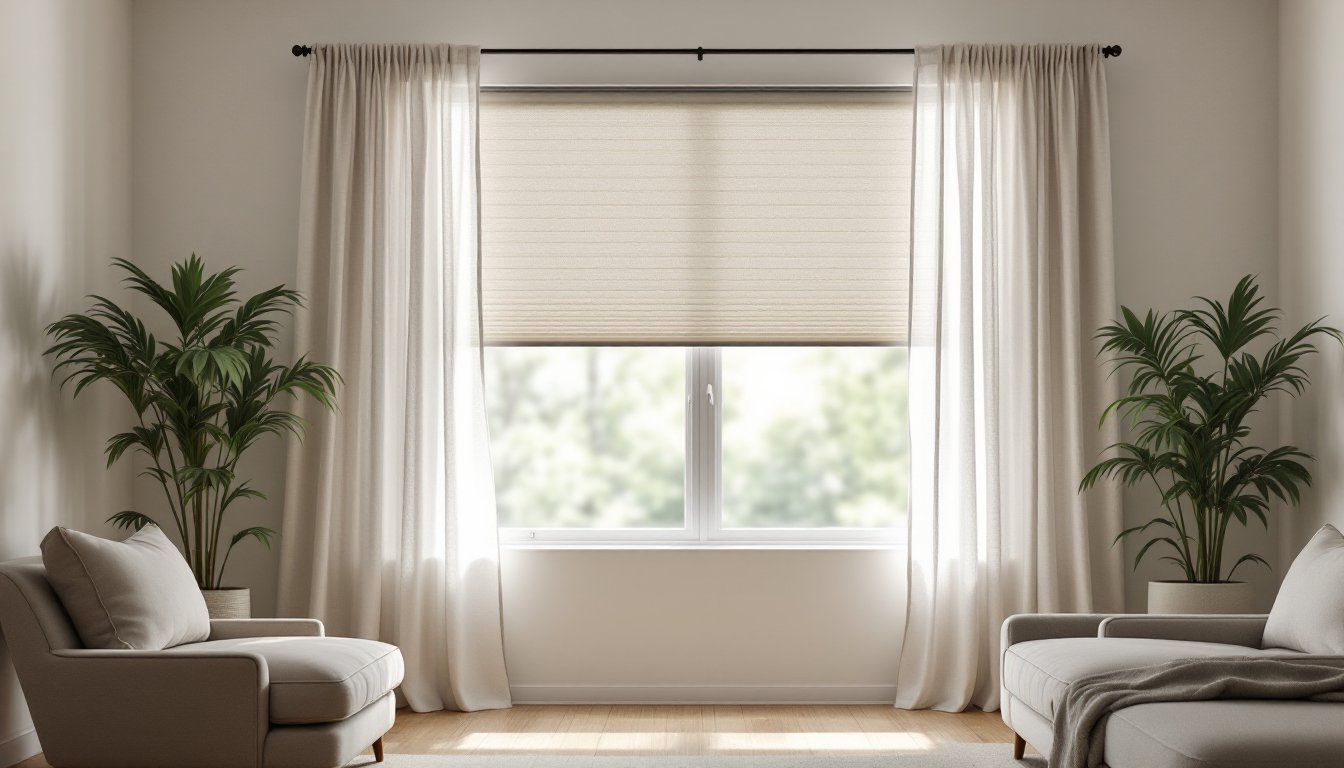
Start with a motorized cellular blind or roller shade mounted inside the window frame (or just above it). Layer lightweight or semi-sheer curtains on a rod 6–12 inches above the window frame, extending 4–6 inches past the frame on each side. The gap between layers improves thermal performance by creating an air pocket, and it lets you adjust each layer independently: shades closed for privacy, curtains open for style during the day: both closed at night.
This setup works especially well in living rooms with large windows or multiple windows across one wall. You get flexibility without looking over-dressed. Measure your window three times, account for the depth of the shade and the rod thickness, and dry-fit curtain rods before hanging.
Mixing Textures and Materials
Pair a sleek, dark roller shade with soft, light linen curtains for contrast. Or combine motorized cellular blinds (smooth, geometric) with textured linen or a linen-cotton blend for depth. The key is visual balance: if your shade is bold in color or texture, keep the curtains minimal, and vice versa. Modern design inspiration shows that texture mixing, matte vs. semi-gloss, smooth vs. woven, creates sophisticated rooms without clashing. Avoid overly matchy sets: a shade and curtains that are slightly different but complementary feels intentional and layered.
Smart Glass and High-Tech Window Solutions
Smart glass (also called switchable glass or electrochromic glass) changes tint on demand, darkening or clearing with the flip of a switch or an app command. It’s the premium option, installation costs $1,500–$3,500 per window, and it requires professional installation and electrical work. But, for homeowners seeking a near-future aesthetic and serious thermal control, it’s worth exploring.
Smart glass eliminates the need for traditional shades entirely, creating an ultra-minimalist look. It manages solar heat gain (keeping the room cooler in summer), reduces glare on screens, and provides privacy without blocking views. Some systems integrate with climate-control systems, automatically tinting to optimize heating and cooling.
Reality check: smart glass requires dedicated wiring and may need a permit depending on your jurisdiction. It’s a permanent installation, so it’s best paired with a long-term stay or ownership. For renters or those unwilling to hardwire, battery-powered motorized shades deliver 80% of the convenience without the commitment or cost. Smart film (an adhesive layer applied to existing glass) offers a budget alternative around $200–$500 per window, though it doesn’t last as long as true smart glass and can be tricky to apply evenly at home. Most homeowners find motorized shades strike the right balance between innovation and practicality.