
Open plan kitchen living room layouts have become a go-to choice for homeowners seeking more flowing, social spaces. Breaking down walls between cooking and lounging areas opens up sightlines, improves natural light, and makes homes feel larger, whether you’re working with 800 square feet or a sprawling ranch. But moving from separate rooms to one unified space requires thoughtful planning around zones, storage, and functionality. This guide walks you through practical open plan kitchen living room ideas that actually work, without sacrificing cooking efficiency or comfort.
Table of Contents
ToggleKey Takeaways
- Open plan kitchen living room designs improve natural light, create social spaces, and increase home resale value by breaking down walls between cooking and lounging areas.
- Define zones without walls using strategic furniture placement, area rugs, lighting circuits, and color blocking to maintain visual continuity while preventing the kitchen from dominating the space.
- Maximize storage in open plans with custom cabinetry, vertical solutions, and island drawers rather than open shelves to keep clutter hidden and maintain a clean aesthetic.
- Prioritize kitchen functionality by ensuring proper work triangle spacing between sink, stove, and refrigerator, with a generous island (24–36 inches deep) and outside-venting range hood to control odors.
- Modern Minimal, Transitional, and Industrial design styles work best for open plan kitchens because they maintain visual coherence across zones without relying on walls for separation.
- Match your open plan kitchen living room layout to your actual living habits rather than copying Pinterest designs, ensuring functionality and comfort for daily use.
Why Open Plan Layouts Are Worth the Investment
Open plan layouts transform how families live together. Instead of someone isolated in the kitchen while everyone else relaxes in the living room, the cook stays engaged, watching kids, joining conversations, monitoring the game. Light flows further into the space, reducing the need for additional fixtures. Resale value often reflects this preference too: homes with thoughtfully executed open plans tend to appeal to a broader buyer base.
But, open plans aren’t magic. They require intentional design to prevent the kitchen from feeling like it’s eating the living room with cooking odors, noise, and visual clutter. The key is creating separation without walls, something we’ll explore in detail. If your home already has the bones of an open plan or you’re considering a renovation, understanding why this layout works helps justify the effort and cost upfront. Most homeowners find the social payoff worth the planning.
Define Zones Without Walls
The biggest challenge in an open plan kitchen living room is visual continuity, spaces can feel undefined or chaotic. Smart zoning uses furniture, flooring, color, and lighting to create boundaries that read naturally.
Using Furniture Placement
A well-positioned sofa acts like an invisible wall. Angle it to face the living area rather than the kitchen pass-through: this naturally anchors the seating zone and prevents it from feeling like an extension of counters. A low bookshelf, console table, or kitchen island can reinforce the boundary without blocking sightlines. Ensure islands are sized appropriately, a massive 5-foot island in a 12-by-14-foot kitchen will dominate and trap you behind it during meal prep. Conversely, a 3-by-4-foot island in an open 20-by-20-foot space lets traffic flow while defining the cooking zone.
Rugs are underrated zoning tools. A large area rug (8 by 10 feet minimum) anchors the living area visually and acoustically, helping contain kitchen noise. Avoid running the rug directly into the kitchen: a clear hardwood or tile transition signals the zone shift.
Lighting and Color Blocking
Lighting does heavy lifting in open spaces. Install separate circuits or dimmer switches for kitchen task lighting and living room ambient lighting so each zone can operate independently. Pendant lights over the island or dining table visually separate the kitchen from lounging areas. Consider warm color temperatures (2700K) for living spaces and neutral or slightly cooler (3000K) for task areas: this subtle difference reinforces zones without feeling jarring.
Color blocking with paint or finish changes also works. A kitchen with white cabinetry and white walls can transition to a living room painted a warm gray or soft green. Alternatively, a bold kitchen backsplash or accent wall creates visual interest that signals “here’s the kitchen.” Some homeowners use different flooring, tile in the kitchen, wood in the living room, to define zones underfoot. This also helps with practical concerns like moisture and wear patterns, since kitchen floors take more abuse.
Storage Solutions for Combined Spaces
Open plan layouts expose everything, so storage must pull double duty: functional and finished-looking. Clutter reads worse in an open space because there’s nowhere to hide it.
Custom cabinetry built into walls between kitchen and living areas works well, drawers and shelving that serve both zones without screaming “storage.” Upper cabinets with glass fronts in the kitchen transition visually to open shelving in the living area, continuing the sight line while providing display and storage. A walk-in pantry tucked around a corner or behind a pocket door keeps dry goods and appliances out of view without taking up island or counter space.
Island storage is essential: deep drawers for baking sheets and pans, smaller drawers for utensils, and closed cabinetry below for less-attractive items like trash and recycling. Don’t waste island footprint on shelving if you can use drawers: open shelves on islands collect visual noise and dust from cooking. Built-in benches along the living room edge with lift-top storage hide throw pillows, blankets, and media clutter while doubling as extra seating.
Vertical storage saves floor space in small-to-medium open plans. Wall-mounted pot racks, floating shelves for cookbooks or serving pieces, and tall floor-to-ceiling cabinetry (even if it’s just a few bays at the end of a run) keep frequently used items accessible without eating into walking space. The Kitchn regularly showcases kitchens that maximize vertical storage while maintaining a clean, open feel, worth browsing for real examples.
Maximizing Kitchen Functionality in Open Layouts
A kitchen that doesn’t function efficiently becomes a nightmare in an open plan because the family living 10 feet away will notice, and feel, every dropped pan, lingering odor, or inefficient workflow.
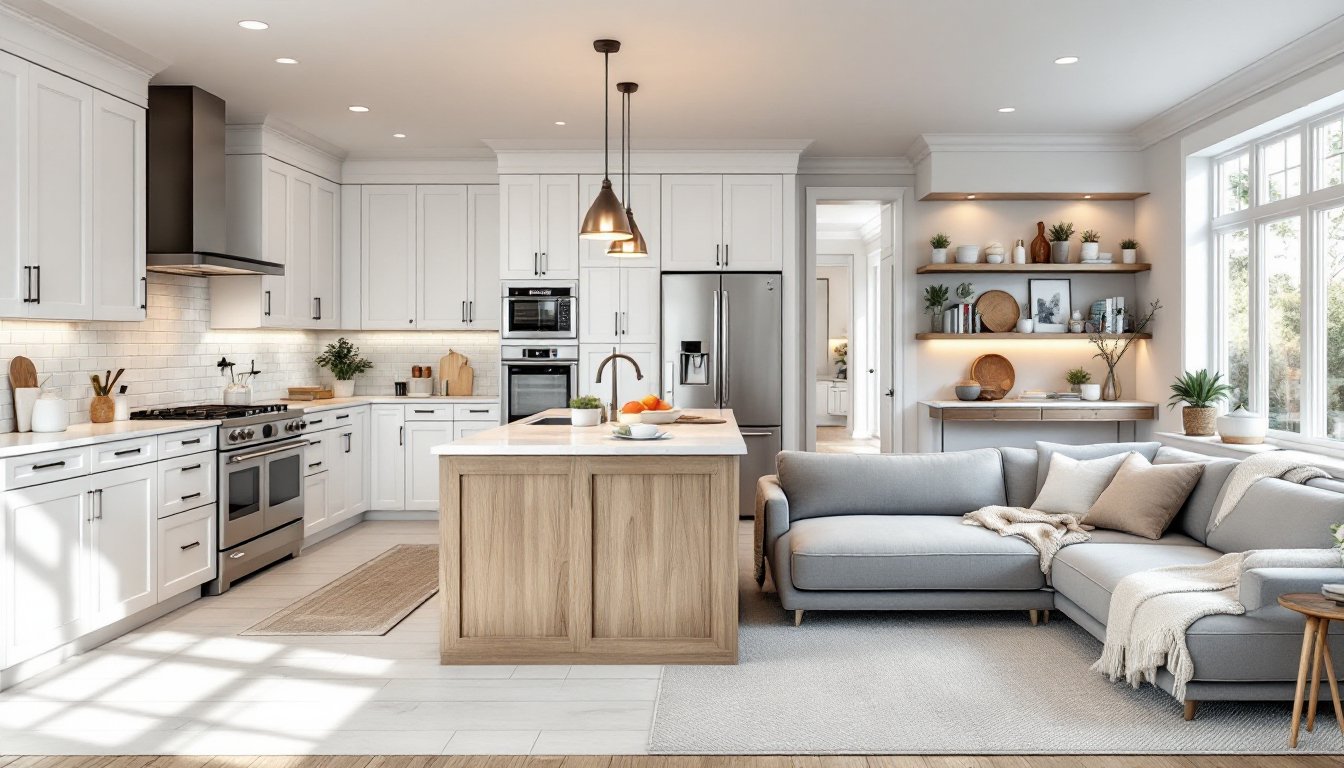
Start with the classic work triangle: sink, stove, and refrigerator should be positioned so you’re not running 20 feet between them. In an open layout, a generous island often becomes your prep station, so size it to fit a cooktop or prep zone, a surface between 24 and 36 inches deep and at least 3 feet long. Ensure the island has clearance on at least three sides for opening appliances and standing elbow-room. If your layout only allows one side of approach, a peninsula (island attached to a wall) is often smarter than a true island.
Ventilation is critical. Open layouts amplify cooking smells because air circulates freely. A range hood should vent outside, not recirculate: recirculating filters catch some smoke but do little for odors. Size it for your cooktop BTU output, a rule of thumb is 100 CFM per 10,000 BTU, with a minimum of 150 CFM. If you can’t vent a hood outside (unusual constraint), at least size the hood generously and use a high-quality filter.
Countertop workspace matters more in open plans because prep happens in full view. Aim for 13–15 linear feet of usable counter, with at least one continuous 24-inch-deep section for rolling out dough or plating. Avoid breaking up counter with too many appliances: a coffee maker and utensil holder are fine, but a toaster oven, stand mixer, and blender all visible creates visual overload.
Finishes must be durable and easy to clean. Stainless steel appliances hide fingerprints less than darker finishes: matte black or bronze hides them better but requires more maintenance. Open shelving in the kitchen must hold items you’re genuinely proud of, everyday dishes in a neutral palette, attractive serving pieces, cookbooks with nice spines. Anything chipped, mismatched, or ugly belongs in closed cabinetry.
Design Styles That Work Best
Not all design aesthetics suit open plan kitchens equally. Styles that work best tend to have visual coherence and don’t rely on visual separation for their appeal.
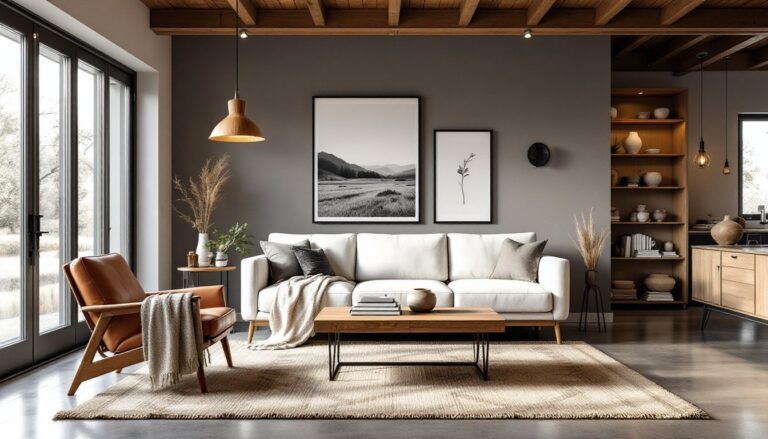
Modern Minimal thrives in open plans, clean lines, limited color palettes, and hidden storage naturally flow across zones. A kitchen with white cabinetry, white walls, concrete counters, and stainless appliances blends seamlessly into a living area with gray upholstery and natural wood accents. There’s no visual jar because the palette is consistent.
Transitional (traditional bones with modern simplicity) also works well. Think shaker-style cabinetry, warm wood tones, and neutral counters in the kitchen flowing into a living room with classic furnishings and a warm color story. This approach feels less sterile than full minimal while maintaining the openness.
Industrial styles, exposed brick, steel accents, concrete, open shelving, work because they’re bold enough to carry the entire space without needing wall separation to feel intentional. The kitchen and living room read as one consistent aesthetic.
Where open plans struggle is in heavily themed spaces (rustic farmhouse kitchens clash with eclectic bohemian living areas) or very colorful designs that demand visual breaks. If the kitchen is deep teal with brass hardware and the living room is sage green with gold accents, the space feels fragmented rather than flowing. Some homeowners solve this by treating the entire space as one design project from the start, rather than upgrading the kitchen and living room at different times.
The Houzz gallery of 75 open kitchen living room designs showcases the range of styles that work, scroll through to find the aesthetic direction that fits your home’s bones and your daily rhythm.
Finally, practical strategies for optimizing open-plan kitchens focus on layout, storage, and noise control, concepts that apply across any style choice. What matters most is matching the vision to your actual living habits, not just Pinterest aesthetics.